Rental yield explained: gross vs net, with a worked example
Why an 8% gross yield can become 4% net, how a mortgage changes the picture, and the checks to run before buying a rental.
Some links are affiliate links: we may earn a commission at no cost to you. How we make money.
Rental listings love to advertise high yields. Most of those numbers are gross yield: rent divided by price, before any costs. What you actually earn is the net yield, and the gap between the two decides whether a property is an investment or a second job that loses money.
Gross yield
Gross yield = annual rent ÷ purchase price × 100
A $300,000 property renting for $2,000 a month brings in $24,000 a year, a gross yield of 8%. It is useful for a first quick comparison between properties, and almost useless for deciding whether to buy.
Net yield
Net yield = (annual rent collected − annual running costs) ÷ purchase price × 100
Running costs include:
- Vacancy: weeks or months between tenants
- Maintenance and repairs: often estimated at about 1% of the property’s value per year
- Property management: commonly a percentage of the rent collected
- Insurance and property tax
- Service charges, ground rent or association fees where they apply
Worked example
Same $300,000 property, $2,000 a month rent, with illustrative costs:
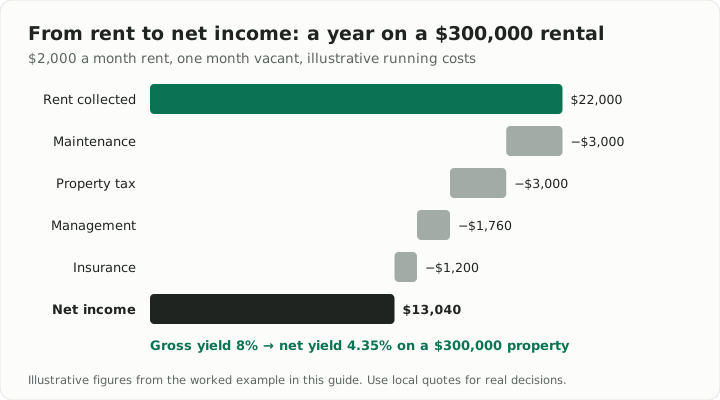
| Item | Per year |
|---|---|
| Rent collected (11 months, one month vacant) | $22,000 |
| Maintenance (1% of value) | −$3,000 |
| Property tax | −$3,000 |
| Management (8% of rent collected) | −$1,760 |
| Insurance | −$1,200 |
| Net operating income | $13,040 |
Net yield: $13,040 ÷ $300,000 = 4.35%, about half of the advertised 8%.
Adding a mortgage changes everything
Suppose you put 25% down ($75,000) and borrow $225,000 over 30 years at 6.5%. The mortgage payment is about $1,422 a month, or about $17,070 a year.
Net operating income of $13,040 minus $17,070 of mortgage payments leaves a cash flow of about −$4,030 a year. The property costs you money every month, even though the listing promised 8%.
Part of each mortgage payment repays principal, which builds your equity, and the property may rise in value. But negative cash flow must be paid from your own income, and it gets worse if rates rise or the property sits empty longer.
Checks before you buy
- Stress-test the rate. Recalculate with the mortgage rate 2 percentage points higher. The deal should still be survivable.
- Use real local costs. Get actual quotes for insurance, tax and management instead of rules of thumb.
- Budget for big repairs. Roofs, heating systems and structural work arrive in lumps, not evenly.
- Check rent with comparable listings, not the seller’s estimate.
- Know the rules. Landlord regulations, licensing, tenant protections and taxes on rental income vary widely.
Alternatives to owning a rental directly
If you want property exposure without a mortgage or tenants, listed property funds (REITs) and some platforms let you invest small amounts in a diversified portfolio of buildings. They trade convenience and diversification for less control.
Tip: Compare any rental’s net yield with what a low-cost diversified fund might return. Owning property is hands-on and concentrated. It should offer a clearly better expected return to be worth the extra work and risk.
This guide is general information, not financial, tax or property advice. Rental costs, taxes and landlord rules vary by country and city.